
Social Life in Saudi Arabia: Then & Now
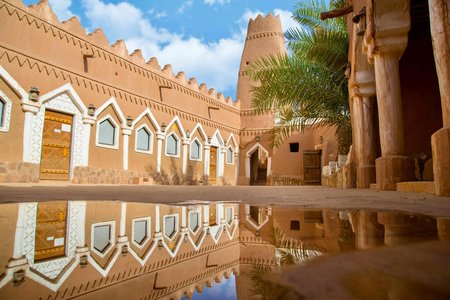 In the late 1970s/early 1980s, Saudi Arabian military hospitals and the King Faisal Specialist Hospital started contracting American and British healthcare management companies to establish Western-standard hospitals. This brought the arrival of large numbers of Western-trained healthcare professionals, of which a high proportion were female nurses. Even though most of the nurses were not Muslims, they were expected to adhere to the cultural and social practices of Saudi Arabia. The "Commission for the Promotion of Virtue and the Prevention of Vice" (known as the Mutawa)The Mutawa were responsible for ensuring public compliance with Islamic religious rules around dress, respecting prayer call, fraternizing with the opposite sex, etc. So, of course, the stick-wielding Mutawa were the bogeymen of Western expatriates. But in April 2016, a combination of Royal Decree and a Saudi Cabinet regulation stripped the Mutawa of their authority, and eliminated their patrolling of city streets. Freeing of Female FashionIn 1980, women had to fully cover their hair and wear an abaya. The abaya had to be black and covered the entire body. Only hands and feet could be uncovered, so fashionable sandals were common. Fast forward to 2017, and women did not need to cover their hair, and abayas had become stylish: brightly coloured, gold-patterned, covered in crystals, bell-sleeved, designer-labeled…. Then, in March 2018 -- just when abayas had become popular fashion items -- they became optional for both foreign women and Saudi women. But women still have to wear loose pants or long skirts and tops which cover most of their body. Women in the WorkforceWhile seeing Saudi women in the workplace is now common, in the early 1980s it was rare to see a Saudi woman working outside the home. Clothing shops -- including the fancy, high-end lingerie shops -- had only male salesmen. So, a woman seeking new unmentionables had to tell an (unfailingly handsome, usually Lebanese) male sales associate her cup size, underwear size, etc. This, of course, contributed to many humourous stories. Finally, in January 2012, a law mandating women-only staff in women’s lingerie and women’s apparel shops was implemented. Today, both women and men work in supermarkets and retail shops. From Limited Shopping to Unlimited ShoppingIn 1980, there were no Western-type malls in Saudi Arabia. With only grocery stores, gold shops, and the traditional souks, you were limited in what you could buy locally. What did the shopaholics among us do? We bought a lot of gold, and Saudi décor and artefacts, e.g., traditional carpets, Bedouin coffee pots, Bedouin jewelry, traditional painted doors, etc. Now, Saudi Arabia's huge, glittering megamalls duplicate anything you would see in Paris or New York. From Chaperones to ChillUntil the mid 2010s, mixed female/male socializing in public was prohibited. Unrelated unmarried couples had to have a chaperone. Some Western women wore a fake wedding ring and pretended to be married to the male with whom they were out. (But if the Mutawa asked for your marriage certificate, you could be in trouble.) Even restaurants had separate sections for men and for women and families. (So, in the case of men entering the family section, they needed a chaperone, e.g., their wife.) Now, men and women, including Saudis, mingle freely in public. But not every Saudi parent is on board with this change: as one Saudi man said after describing his plans to go to dinner with his girlfriend, "But don’t tell my parents!" Movies: Banned and Back AgainIn 1982, there were cinemas in Saudi Arabia, but two factors prompted their closure: First, in 1979, fundamentalist militants opposed to the government and its ties with the West laid siege to the Grand Mosque in Mecca. Second, religious conservatives, who viewed films as immoral and an excuse for gender mixing, put intense pressure on the government to shut down the cinemas. As a result, between 1982 and 2018, cinemas were banned in Saudi Arabia. So, before streaming became common, watching films on VCR tapes and DVDs was the only way to get your Hollywood fix in Saudi Arabia. And because it took so long to get the latest releases onto VCR or DVD, any new flicks were typically pirated films of thoroughly awful quality, taken by a person sneaking a camcorder into a foreign cinema. Cinemas officially reopened in April 2018, and though films may still be censored, now you can see the latest international blockbusters. (And yes, even single men and women can attend together.) Censorship, or Nothing to See Here!In the 1980s, even the mail (letters, magazines, and packages) which expatriates received would probably be censored! A few years later, letters were no longer being censored, but other print media would be. Western magazines would have entire sections redacted. Pictures of women in revealing clothing would be blacked out. A thick black marker line would be drawn between a couple embracing. And, with some clues fully or partly redacted, doing a crossword puzzle could be challenging. Today, there is still some censorship, e.g., pornographic material, material critical of Islam, sexually explicit scenes in movies. As an example, in 2018, the first film shown in Saudi Arabia was Black Panther, with the film’s 40-second kissing scene removed. Strike up the BandFor years, there were no public concerts at all in Saudi Arabia, the only options were classical concerts at embassies or expatriate do-it-yourself bands performing in private compounds. Gender-mixing was the main objection against public performances. But nowadays, in addition to classical music concerts -- and the first Saudi grand opera, which premiered in April 2024 -- the public can watch performances by big-name Western artists, including Mariah Carey, Janet Jackson, Justin Bieber, A$AP Rocky, Usher, Pitbull, Jennifer Lopez, CardiB, and more. Wetting One's WhistleAlcohol has long been banned in Saudi Arabia; a foreigner could be deported for being caught with alcohol. So, for Western expatriates, access to booze was limited: embassy parties, brew your own "bathtub gin," or as people in the Eastern Province did, smuggle in your poison of choice from Bahrain. But you had to be careful -- if the Mutawa knew that a party was being held at a particular residential or embassy compound, they would wait outside to see if they could nab anyone who was leaving in a tipsy state. Total prohibition ended in January 2024 when a shop opened in Riyadh's diplomatic quarter to sell alcohol to non-Muslim diplomats. As of January 2025, non-Muslims with a high income or premium residency can also buy alcohol from this store. Santa & SaudiFor many years, in the run-up to Christmas, Christians would buy seasonal greenery and related decorations through the mail, from embassy-sponsored Christmas markets, on the local black market, or from the back rooms of shops. But since 2020, stores have been selling Christmas items, putting up Christmas displays, and selling seasonal treats, such as chocolates and stuffed dates. (And even Santa was spotted in Al Khobar!) Prayer Call PausePrayer call happens five time each day. Originally, all shops and restaurants had to close during the approximately 20 minutes of prayer. If you were in a shop, you had to leave and wait outside. If you were in a restaurant, you could stay and eat the food you had already been served, but nothing new would be served for the duration of prayer. To ensure they could be in the restaurant eating before prayer call, Westerners would check the daily posted prayer times before heading out to dinner. In July 2021, things changed: businesses and restaurants now remain open during prayer call. From Riding in the Back of the Bus to DrivingIn the 1980s, public transport in cities was limited to buses. Women had to ride at the back of the bus in the restricted women's section, which had perhaps four seats. Only men were allowed in the front of the bus. So, at that time, most women hired a driver to take them around. Others would rely on taxis where, before you entered the taxi, you had to negotiate the price and determine if the driver actually knew how to get where you wanted to go. As of June 2018, women can drive in Saudi Arabia. For those who don’t like driving, ride share organizations, like Uber, operate across the country. And Riyadh even has a metro! Expatriates: Beyond the CompoundIn the past, Western expatriates lived either in private Western "family" compounds with security gates or, in the case of healthcare, in accommodations on the grounds of the hospital at which they worked. What's more, in the case of single staff at hospitals, buildings or compound areas were sex-segregated, i.e., a woman could not bring even a male relative into her accommodations, and vice versa. On the other hand, on family compounds, men and women were easily able to socialize. Today, in 2026, housing on hospital grounds is still sex-segregated, but expatriates can rent their own accommodations in the city, among everyday Saudis and other expatriates. Property OwnershipUntil January 2026, expatriates could live in Saudi Arabia for decades, but they could not purchase property. Now, foreigners can buy residential, commercial, and agricultural properties. The guidelines restrict ownership to certain government-approved areas, mostly in high-demand cities like Riyadh and Jeddah. Tighter restrictions exist for Mecca and Madinah, even when it comes to foreign Muslims. Final ThoughtsWesterners often found unexpected benefits in adhering to the rules then in place in Saudi Arabia. With no public entertainment, we had to make our own fun: we organized tennis tournaments and desert running clubs; acted in plays; got together to make music and dance; threw parties for national holidays; held movie parties at homes on Western compounds; and best of all, camped in the desert and spent weekends on the Red Sea. Some people feel nostalgic for the old Saudi Arabia; others feel more comfortable with the current, more Westernized environment. But even in modern Saudi Arabia, the intangible benefits remain the same: a feeling of safety that is not matched in the West, working with people from throughout the world, the relaxed lifestyle, and exploring the desert and ancient sites of this welcoming country. Most Popular |
Related |





Copyright (C) 2026 Helen Ziegler and Associates. All rights reserved.